
Chapter 83: Game Bouncing
game bouncing, the boingy rebound magic that makes jumps satisfying and physics feel alive! I’m your teacher, breaking it down super detailed, simple English, step-by-step, with math you’ll nail (like school but fun), a table, real examples (Mario Goomba squash, Sonic springs), pics to see the boing, and a challenge. By the end, you’ll tweak bounces in your mind’s game engine. Headphones for “boing!” SFX? Let’s rebound! 🏀🚀
1. The Basics: What Exactly Is Game Bouncing?
Game bouncing (aka rebound mechanics or bounciness) is the physics effect where objects snap back up/sideways after hitting something, losing some (or no) speed. It’s coded “elasticity” on collision—think rubber ball vs. clay lump!
- Simple Definition: When your character/ball/enemy smacks a surface, it reverses direction with tunable “springiness” (high = super boing, low = thud-stop).
- Key Job: Adds fun to movement—extra height on jumps, pinball chaos, dodge rolls. Ties to gravity (fall → boing → arc up!).
- Analogy: Hyderabad street cricket—tennis ball on concrete (bounces high, e=0.8), vs. wet mud (sticks, e=0.2). Bouncing = that “yes!” rebound feel.
- Core Tech:Coefficient of Restitution (COR or “e”)—0=no bounce ( inelastic), 1=perfect reverse (elastic), >1=super bounce (cartoony!).
Without it? Everything slides/sticks—boring falls. With it? “One more try!” addiction.
2. Quick History: From Pinball Ping to Physics Engines
- 1970s Arcades:Pong simple rebounds; real pinball tables (bumpers “DING!” bounce ball).
- 1980s:Super Mario Bros.—Mario boings on Goombas (fixed upward kick).
- 1990s:Sonic springs/pads for speed boosts.
- 2000s: Physics engines (Havok/PhysX)—realistic balls in Wii Sports.
- 2010s-Now: Unity/Unreal tunable “Bounciness” slider (0-1+). 2026: Chaos Physics for destructible boing-fests.

3. Types of Game Bouncing: The Boing Spectrum (With Table)
Designers tweak per game! Table compares:
| Type | COR (Bounciness) | Feel (Simple) | Best For | Example (Pic Moment) |
|---|---|---|---|---|
| No Bounce (Inelastic) | 0 | Thud—stops dead | Combat, sticky traps | GTA car crash crumple
 discussions.unity.com
Ball Bounce Physics Exit Trajectory – Unity Engine – Unity Discussions
|
| Realistic | 0.3-0.7 | Natural rebound (basketball) | Sports sims | FIFA ball on turf |
| Elastic/Perfect | 1 | Exact reverse speed | Pinball | Ball off bumpers—endless if no friction!
gameroomshop.com
Pinball Machine Terminology: Beginner’s Glossary — Game Room Shop
|
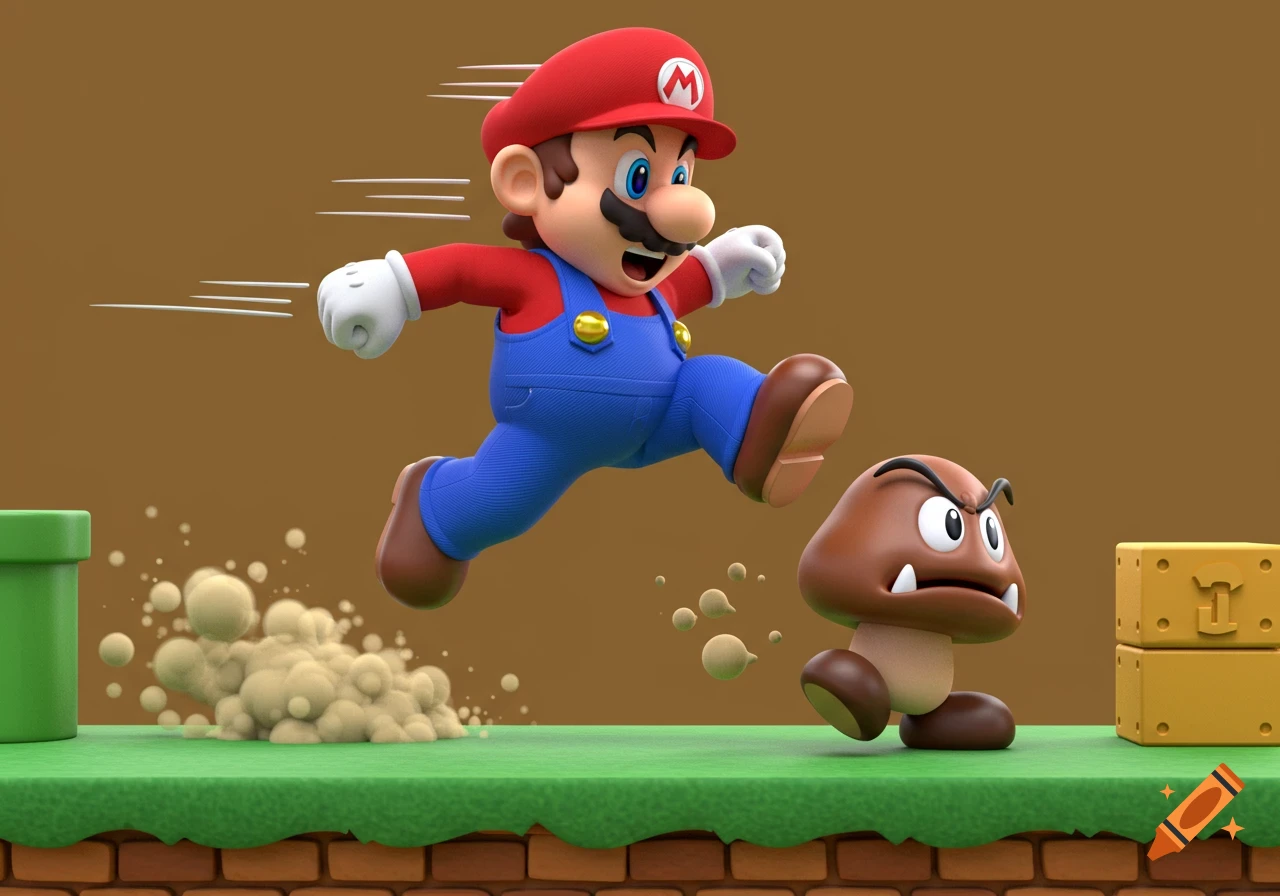
| Super Bounce | >1 (1.2-2+) | Cartoony mega-boing! | Platformers | Mario on Goomba (extra height!)
craiyon.com
3D illustration of Mario jumping to squash a Goomba in a classic game environment. on Craiyon
|
| Directional | Tuned vector | Always up/left (not physics-based) | Puzzles/boosts | Sonic/Crash bounce pads
sonic.fandom.com
Bounce Pad | Sonic Wiki Zone | Fandom
|
| Angular (Spin) | + rotation | Ball spins/curves post-bounce | Racers/golf | Rocket League aerials |
4. How Game Bouncing Actually Works: Physics Math (Step-by-Step)
Engines detect collision → apply COR formula every frame (60x/sec).
- Core Formula (For Ball Hitting Fixed Wall):v_after = -e × v_before (Negative reverses direction; e scales energy kept.)
Transparent Math Example (Drop Ball from 10 units, g=-20 like gravity lesson): Initial v_down = -10 (at impact). Simulate 3 bounces:
| Bounce # | v_before (down) | e (Bounciness) | v_after (up) | Height Next | Explanation |
|---|---|---|---|---|---|
| 1 | -10 | 0.8 | -0.8 × -10 = +8 | ~3.2 units | 80% energy back: (8²)/(2×20)=1.6 peak ×2 arc. |
| 2 | -8 | 0.8 | +6.4 | ~2 units | Slower each time (energy loss). |
| 3 | -6.4 | 0.8 | +5.12 | ~1.3 units | Fades realistically. |
How to Arrive at Solution:
- At impact, relative velocity (ball vs. wall=0) = v_before.
- Post-collision: relative v_after = -e × relative v_before.
- For fixed wall: Ball v_after = -e × v_approach.
- Next height = (v_after²) / (2 × gravity). Multiply by e² each bounce (energy ~ v²). Full 2-body: v1′ = v1 – (1+e) × (m2/(m1+m2)) × (v1 – v2).

Tricks: Friction slows spin; spin affects curve (Magnus effect).
5. Real Examples: Boing in Action!
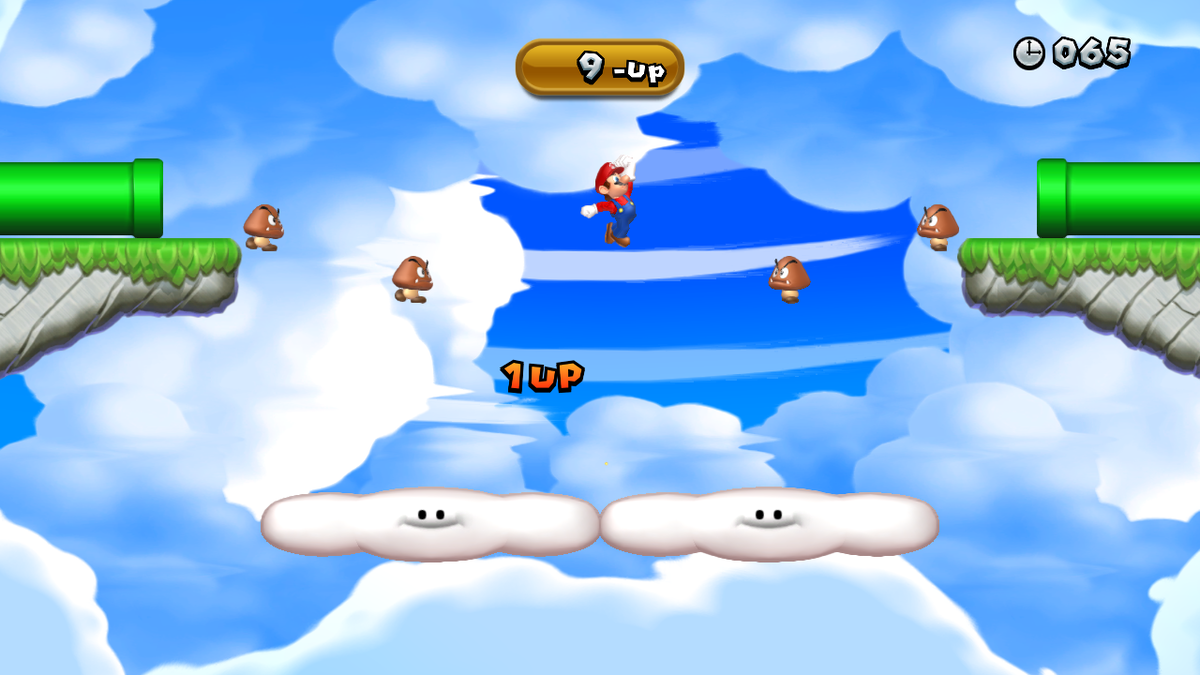
- Super Mario Bros.: Jump on Goomba = super bounce (e>1 + fixed +10 up velocity). Squash → boing higher than normal jump!
- Sonic/Crash Bandicoot: Springs/bounce pads—directional mega-boing to reach secrets.
- Pinball FX: Ball bounces off 100+ bumpers (e=0.9) + flippers for combos.
- Unity/Modern Sims: Bouncy balls in Angry Birds or Totally Accurate Battle Simulator—ragdolls flop/boing.
- BGMI: Grenade bounces off walls (low e for realism).
Epic: Super Meat Boy—precise wall-bounces for pixel-perfect runs.
6. Designer Secrets: Tuning the Perfect Boing
- Fun Rule: e=0.7-0.9 feels “juicy”; test 100x.
- Combine: Gravity + bounce = arcs; sound “boing!” + particles.
- Bugs: Infinite bounce loops? Cap iterations.
- Mobile: Lower e for battery.
7. The Future: 2030+ Boings
- Ray-Traced Physics: Perfect curves/lights on bounces.
- VR: Haptics rumble the boing.
- AI: Adaptive e (bouncy for kids mode).
8. Your Challenge: Hyderabad “Biryani Bounce” Game!
Tweak bounces for auto-rickshaw racer:
- Pothole: e=0.5 (realistic skid).
- Power-up: e=1.5 (mega jump over cows!).
- Boss: Pinball bumpers?
(Teacher’s: Pothole loses speed, power = Sonic-style flight!)
Boing mastered—games without it flop! Fave bounce (Mario Goomba? Pinball high score?)? Next: “Game Friction”? Reply! 😎
Class bounced… replay with fresh eyes! 🎮🦘




